
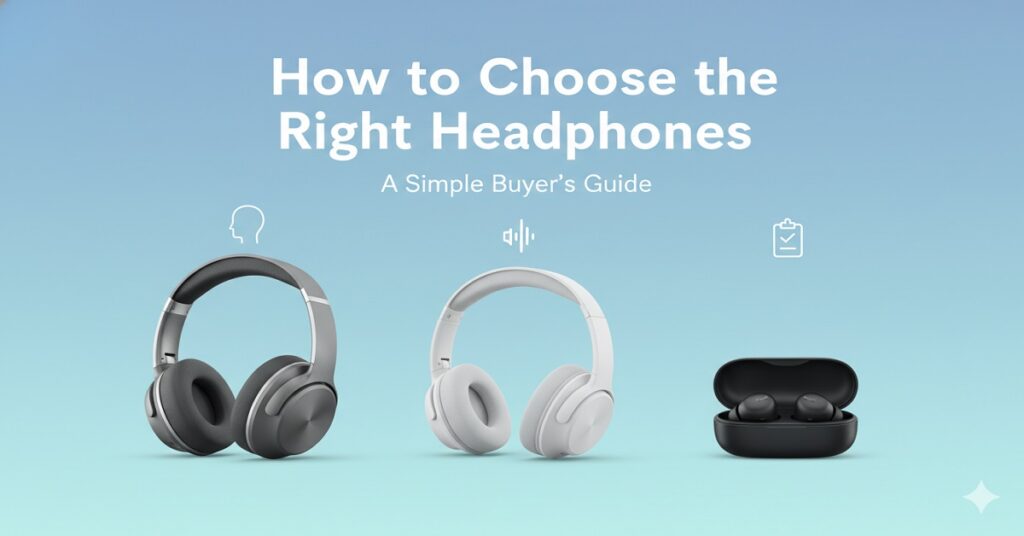
Buying headphones should be simple, but for many people it feels surprisingly confusing. Walk into any store or browse online, and you are immediately faced with terms like over-ear, in-ear, open-back, noise cancelling, wired, wireless, codecs, drivers, and battery hours. Every product claims to be the best, yet many buyers still end up disappointed after using their headphones for a few days.
This confusion does not come from a lack of options. It comes from a lack of clear understanding. Most people are not sure what actually matters for their own listening habits, and what can safely be ignored.
By the end of this guide, you will clearly understand how to choose the right headphones for your needs. You will learn what different headphone types mean, why certain features matter in real life, and how to avoid common buying mistakes. The goal is not to push you toward any specific product, but to give you the confidence to choose wisely, whether you are reading reviews, comparing models, or shopping in-store.
Another reason this topic matters is how quickly headphone technology changes compared to how slowly human habits change. New terms and features appear every year, but most people still listen in the same few ways: during work, while commuting, or at home to relax.
When buyers chase trends instead of understanding their own routines, they often end up with headphones that feel impressive at first but inconvenient over time. This guide is meant to slow that process down and replace guesswork with understanding.
- 1. What Does “How to Choose the Right Headphones” Mean?
- 2. Why This Matters When Buying Audio Products
- 3. How It Works (Explained Simply)
- 4. Common Misunderstandings and Myths
- 5. Real-World Scenarios and Examples
- 6. Pros, Cons, and Limitations of Different Choices
- 7. How to Make Better Decisions Using This Knowledge
- 8. When You Should Care About This (and When You Don’t)
- 9. FAQs (People Also Ask)
- Share This Guide With Someone Who’s Confused About Headphones
- Conclusion
1. What Does “How to Choose the Right Headphones” Mean?
When people ask how to choose the right headphones, they are not asking for the most expensive or most popular option. What they usually want is a pair of headphones that fits comfortably into their daily life.
It also means recognizing that “right” can change over time. The headphones that made sense during a daily commute may not be ideal for remote work at home. A student’s needs may differ from a working professional’s, even if both listen to music and attend calls.
Understanding how to choose the right headphones gives you a framework that adapts as your lifestyle changes, rather than locking you into a single type of product.
Choosing the right headphones means matching the product to how you actually use audio. This includes where you listen, how long you listen, what you listen to, and what you expect from the experience. A pair of headphones that works perfectly for long office calls may feel terrible for travel. Another that sounds great for music might be frustrating for phone calls.
In simple terms, learning how to choose the right headphones is about understanding your own habits first, and then selecting a design that supports those habits instead of working against them.
2. Why This Matters When Buying Audio Products
Headphones are not one-size-fits-all. Yet many buyers treat them that way. They focus on star ratings, brand names, or feature lists without thinking about how those features behave in daily use.
This often leads to regret. Some people buy headphones that sound great but hurt after an hour. Others buy noise cancelling models for home use, where they barely benefit. Many buy wireless headphones without realizing they dislike charging them constantly.
Understanding how to choose the right headphones helps you avoid wasting money and time. More importantly, it helps you enjoy your audio without frustration. When headphones suit your lifestyle, they disappear into the background and simply work.
Recent Post: Boat Rockerz 650 Pro Review (2026): Buy or Skip?
Poor headphone choices often create subtle daily friction rather than obvious failure. Discomfort after an hour, unreliable connections during calls, or constantly adjusting fit may not feel like deal-breakers at first.
Over weeks and months, however, these small frustrations add up. Learning how to choose the right headphones reduces this friction and turns listening into something effortless rather than something you tolerate.
3. How It Works (Explained Simply)
To understand how to choose the right headphones, it helps to break the decision into a few basic questions.
First, ask where you will use them most. At home, in an office, while traveling, or outdoors. Each environment places different demands on comfort, isolation, and portability.
Second, consider how long you listen at a time. Short listening sessions prioritize convenience. Long sessions prioritize comfort and reduced fatigue.
Another helpful way to think about this process is to separate needs from preferences. Needs are non-negotiable, such as comfort for long hours or a stable connection for work calls. Preferences are flexible, such as bass emphasis or design style.
When buyers confuse preferences with needs, they often compromise on what actually matters. Understanding how to choose the right headphones helps keep these priorities clear.
Third, think about what you listen to. Music, podcasts, video calls, movies, or a mix of everything. Spoken content benefits from clarity, while music may benefit from balance or bass depending on preference.
Finally, decide how much complexity you want. Some people enjoy adjusting settings and managing features. Others want headphones that work with minimal effort.
When you answer these questions honestly, many options naturally eliminate themselves. This process makes choosing the right headphones far easier than comparing technical specifications.
4. Common Misunderstandings and Myths
One common myth is that higher price always means better sound. In reality, sound quality is subjective. A cheaper headphone with a sound profile you enjoy will feel better than an expensive one that does not suit your taste.
Another misunderstanding is that more features always improve the experience. Features like noise cancellation, touch controls, and app support can be helpful, but they can also introduce complexity, bugs, or battery drain.
Many people also believe that professional or studio headphones are best for everyone. These are often designed for accuracy, not enjoyment. For casual listening, they may sound flat or unexciting.
Understanding how to choose the right headphones means separating useful features from impressive-sounding ones.
There is also a widespread belief that reading more reviews automatically leads to better decisions. In reality, consuming too many opinions without a clear framework can increase confusion.
Different reviewers have different ears, environments, and expectations. This is why learning how to choose the right headphones for yourself is more powerful than memorizing any single recommendation.
5. Real-World Scenarios and Examples
Work and Office Use
For work, comfort and microphone quality matter more than deep bass. Over-ear or on-ear headphones often work well because they distribute pressure and remain comfortable during long meetings. Stable connectivity is more important than advanced sound tuning.
Travel and Commuting

Travel introduces noise, movement, and limited space. Compact designs, good isolation, and easy controls matter more than perfect sound detail. Battery life also becomes critical when outlets are scarce.
Household dynamics also influence headphone choices more than people realize. Parents may need to remain aware of their surroundings. Shared living spaces may require sound isolation to avoid disturbing others.
In these situations, the “best sounding” headphones may be less suitable than those that balance awareness, comfort, and ease of use. Real-world context often matters more than pure performance.
Music and Entertainment
Music listening depends heavily on personal taste. Some people prefer bass-forward sound, others prefer balance. Long listening sessions benefit from relaxed tuning that avoids fatigue.
Calls and Communication
For calls, clarity matters more than richness. Headphones with clear midrange reproduction make voices sound natural and reduce strain during conversations.
6. Pros, Cons, and Limitations of Different Choices
Every headphone style involves tradeoffs. Over-ear headphones offer comfort and soundstage but are bulky. In-ear headphones are portable but may cause ear fatigue. Wireless headphones offer convenience but require charging. Wired headphones avoid batteries but limit movement.
Learning how to choose the right headphones means accepting that no option is perfect. The goal is to choose limitations you can live with, not eliminate them entirely.
You Might Also Like: JBL Tune 510BT Review: Worth Buying or Not?
It is also important to recognize that compromise is not failure. Choosing one limitation over another is part of making an informed decision. Acknowledging these tradeoffs upfront prevents unrealistic expectations and helps buyers feel satisfied rather than constantly wondering if they made the wrong choice.
7. How to Make Better Decisions Using This Knowledge
Start by writing down your top three priorities. Comfort, battery life, portability, sound, or call quality. Rank them honestly.
Then, read reviews with those priorities in mind. Ignore praise or criticism that does not relate to your use case. A complaint about bass may not matter if you mainly listen to podcasts.
Another practical step is to imagine a typical week of use rather than a single ideal moment. Think about how often you charge devices, how frequently you switch between tasks, and where interruptions usually occur.
Headphones that fit smoothly into an average week often outperform those that shine only in specific situations. This mindset reinforces how to choose the right headphones with long-term satisfaction in mind.
Finally, be realistic about usage. If you rarely travel, do not overpay for travel-focused features. If you listen for hours daily, prioritize comfort over compactness.
This approach leads to confident decisions rather than impulse buys.
8. When You Should Care About This (and When You Don’t)
You should care deeply about how to choose the right headphones if you use them daily, rely on them for work, or experience discomfort with past purchases.
You may not need to overthink the decision if you listen occasionally or already know what style you enjoy. In those cases, basic comfort and reliability may be enough.
Understanding when not to overanalyze builds trust and prevents decision fatigue.
It is also acceptable to care less when expectations are modest. Not every purchase needs to be optimized. Understanding how to choose the right headphones includes knowing when “good enough” is genuinely sufficient. This perspective helps reduce stress and avoids unnecessary upgrades driven by fear of missing out.
9. FAQs (People Also Ask)
Beginner vs Everyday Listener: Does Experience Level Matter?
Experience level affects confidence more than ability. Beginners often worry they lack the knowledge to choose correctly, while experienced listeners sometimes overthink small differences. In practice, both groups benefit from the same approach: focus on usage, comfort, and reliability first. The difference is not skill, but familiarity with personal preferences. Learning how to choose the right headphones shortens this learning curve for everyone.
Share This Guide With Someone Who’s Confused About Headphones
Many people feel overwhelmed when buying audio products. Sharing this guide helps them understand the basics before spending money.
Clear knowledge leads to better choices, fewer returns, and more satisfying listening experiences. When more people understand audio better, everyone benefits.
When readers share educational content instead of promotional claims, it encourages healthier conversations around technology. It shifts focus from brand loyalty to informed decision-making. Over time, this leads to better products and better experiences for everyday users.
Explore Next: Sony WH-CH520 Review: Simple, Honest Verdict Before You Buy
Conclusion
You now understand how to choose the right headphones by focusing on real-life use instead of marketing claims. You learned how environment, comfort, sound preferences, and daily habits shape the right choice.
This knowledge matters because it puts control back in your hands. Instead of guessing or copying others, you can choose confidently based on your own needs.
When you understand the why behind the choice, buying headphones becomes simple, practical, and far more satisfying.
Choosing headphones does not require technical expertise, only thoughtful reflection. By understanding how to choose the right headphones based on real-life use, you move from reacting to marketing toward making deliberate choices.
This knowledge stays useful long after one purchase and continues to guide smarter decisions as your needs evolve.

About the Author: Prasad I.
Prasad I. is an audio reviewer and content creator who focuses on practical, real-world testing of headphones and audio gear. His reviews are written to help readers make confident buying decisions by clearly explaining comfort, sound, usability, and long-term value without marketing hype.